Avoid hidden rubbish collection fees in Lambeth
Posted on 03/06/2026
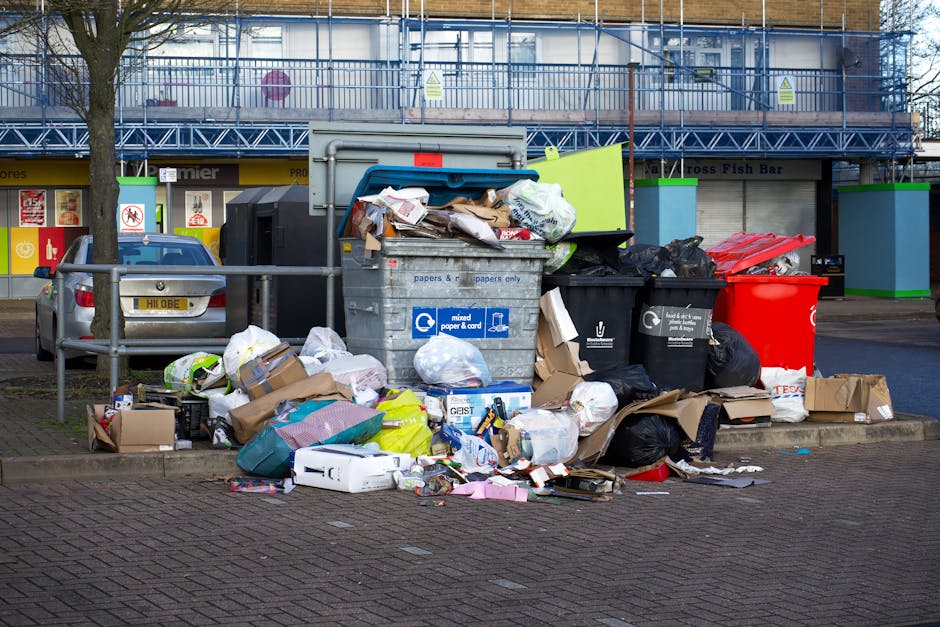
If you have ever booked a rubbish collection and then seen the final bill creep up, you will know how irritating it feels. One minute the quote looks fine, the next you are being charged for stair access, load size, waiting time, or a "sort of" extra that was never obvious in the first place. This guide is here to help you avoid hidden rubbish collection fees in Lambeth by showing you what to check, what to ask, and how to compare offers without getting caught out.
Whether you are clearing a flat near the station, dealing with builder's waste after a renovation, or just getting rid of an old sofa that has been sitting there for weeks, the same principle applies: the best price is the one you can actually understand. Let's face it, nobody enjoys reading tiny-print quotes at 8:30 in the evening after a long day. But a few careful checks now can save you money, stress, and a surprise phone call later.
In the sections below, you will learn how rubbish collection pricing usually works in practice, the warning signs of hidden fees, and the simple steps that keep your booking transparent. You will also find a practical checklist, a comparison table, and a few local examples from everyday Lambeth situations.
Why Avoid hidden rubbish collection fees in Lambeth Matters
Hidden fees are more than just annoying. They can distort your decision-making from the start. A quote that looks cheapest at first glance may become expensive once access, labour, disposal categories, or collection timing are added in. That is especially awkward if you are comparing multiple providers and trying to keep a project on budget.
In Lambeth, where properties often come with narrow staircases, shared entrances, permit restrictions, and limited parking, pricing transparency matters even more. A collection job in a converted flat is not the same as a straightforward ground-floor pickup. If a company does not explain that clearly, you can end up paying for their assumptions rather than your actual waste.
There is also a trust issue. Clear pricing usually reflects a clearer service overall. If a business is upfront about what is included, how lifting is charged, and what happens if the load changes, you are more likely to get a smoother experience on the day. That sounds simple, but honestly, it saves a lot of grief.
For anyone planning a bigger change, maybe a move, a flat refresh, or a renovation, the money side connects quickly with other decisions too. If you are already looking at local property or neighbourhood costs, it helps to read related guidance like the guide to buying in Lambeth or the Lambeth real estate essential buying guide, because rubbish costs often sit quietly inside a wider moving or improvement budget.
How Avoid hidden rubbish collection fees in Lambeth Works
The simplest way to think about rubbish collection pricing is this: a quote should tell you what the service covers, what it excludes, and what may change the final amount. In a sensible setup, you should be able to answer four questions before booking:
- What type of waste is being collected?
- How much waste is there?
- How easy is it to access?
- Are any extras already included?
Most hidden fees appear when one of those details is vague. For example, "2 cubic yards" sounds neat enough, but if you cannot visualise the volume, you may underestimate the load. Or a quote might include collection from outside your property, but not from a top-floor flat with no lift. Tiny detail, big difference.
Practical pricing usually depends on a mix of volume, weight, waste type, labour, and access. Some items are straightforward, like bagged general waste. Others need more handling, such as heavy furniture, builders' rubble, or mixed house clearance waste. If the waste needs sorting, carrying down stairs, or careful loading because of awkward access, those are normal cost factors. The issue is not charging for them. The issue is hiding them.
If you want a broader look at how services are usually presented, the site's pricing and quotes page and services overview can be useful as background when you are comparing options. That context matters because a fair quote should feel structured, not improvised.
Key Benefits and Practical Advantages
Getting pricing right is not just about saving a few pounds. It changes the whole experience.
- Better budgeting: You know the full cost before committing, so there is less last-minute scrambling.
- Fewer disputes: Clear expectations reduce awkward conversations on collection day.
- Faster decisions: If the quote is readable, comparing providers becomes far easier.
- Less stress: No one likes wondering whether the van arrival will trigger another charge.
- Cleaner planning: You can time the collection around moving day, renovation work, or office closure more confidently.
There is another benefit people overlook: transparency usually encourages better preparation. When you know what affects the price, you naturally sort waste more efficiently, place items accessibly, and keep the job simpler for everyone. That helps the crew, and it helps your wallet. Win-win, basically.
For businesses and busy households, this is especially valuable during larger clearances. If you are emptying a workspace, you may want to look at the practical differences between office clearance in Lambeth and a standard domestic collection. Likewise, bulky household items may be better handled through a dedicated furniture disposal service rather than treated as generic waste.
Who This Is For and When It Makes Sense
Honestly, almost anyone booking waste removal in Lambeth can benefit from a careful pricing check. But some people need it more than others.
- Flat owners and renters: Especially in upper-floor properties, where access can affect labour charges.
- Landlords and letting agents: End-of-tenancy clearances can be rushed, and rushed bookings are where fees sneak in.
- Home movers: Moving day is busy enough without extra charges appearing at the end.
- Tradespeople: Builder's waste often changes by volume, and mixed loads need careful clarification.
- Office managers: Office clearances often include mixed items, sensitive equipment, and timing concerns.
- Garden project owners: Soil, branches, and green waste are not always priced the same as general rubbish.
This also makes sense if you are dealing with a one-off event or a seasonal clear-out. Think of post-party clean-up, a spring refresh, or that slightly chaotic Sunday when you finally decide to clear the spare room. We have all been there. The rubbish somehow multiplies overnight.
If you are dealing with a special type of waste, it helps to read the most relevant service guidance first. For example, green material may belong in garden waste removal in Lambeth, while ongoing mixed waste may be better suited to waste collection in Lambeth. Matching the service to the job is one of the easiest ways to avoid hidden add-ons.
Step-by-Step Guidance
Here is a straightforward process you can use before booking any rubbish collection service.
- List exactly what needs removing. Write down the items, estimate the amount, and separate general waste from bulky or specialist waste.
- Take a few photos. A couple of good pictures usually tell a much clearer story than a rushed verbal description.
- Check access conditions. Note stairs, lifts, parking limits, gated entrances, or anything that makes loading slower.
- Ask what the quote includes. Labour, loading, disposal, VAT if applicable, and any waiting time should be clear.
- Ask what could change the price. This is the key question. If the answer is vague, that is a warning sign.
- Confirm waste type rules. Some items need separate handling, and mixing them may affect the job.
- Get the final terms in writing. A message or email is fine. Keep it simple and readable.
- Prepare the waste before arrival. Put items in one place if possible and make access as easy as you can.
If you want the process to feel less rushed, it can help to think about it like booking transport for a lot of bags. The more clearly you describe the load, the less chance of awkward surprises. Not rocket science, just decent preparation.
One useful habit: ask whether the quote is fixed or estimate-based. A fixed quote is usually clearer for a defined job, while an estimate can be more suitable if the volume or access is uncertain. Both can be legitimate. The problem is when they are presented as the same thing. They are not.
Expert Tips for Better Results
These are the little things that make a surprisingly big difference.
- Use plain language when describing waste. "Old wardrobe, broken desk, four bags, and some cardboard" is better than "household bits".
- Ask about stair charges early. In Lambeth flats, this is often the hidden issue people forget.
- Check whether heavy items are priced differently. A mattress is not the same as a bag of clothes.
- Separate recyclable material if asked to. It can keep the load simpler and may support better handling.
- Book before your deadline if possible. Last-minute bookings leave less room for clear comparison.
- Be honest about the volume. Understating the load is the fastest route to an awkward revision.
Another tip that sounds obvious but really helps: ask for the final price structure in a short summary. Even three lines can do it. For example, what is included, what is excluded, and what triggers a change. That alone filters out a lot of dodgy pricing.
If your job involves heavier or more specialised clearance, you may also want to look at builders' waste disposal in Lambeth or the practical notes on insurance and safety. Those details do not just help with compliance. They also reveal whether the service is set up properly, which often correlates with transparent pricing.

Common Mistakes to Avoid
Most hidden-fee problems come from a few familiar mistakes. Easy to make, annoying to fix.
- Choosing the cheapest quote without checking inclusions. A bargain can turn expensive once extras are added.
- Giving vague descriptions of the waste. "A bit of rubbish" is not enough for an accurate estimate.
- Ignoring access details. If the crew has to carry items down several flights, that matters.
- Assuming all waste is priced the same. It usually is not.
- Not asking about minimum charges. Small loads can still attract a minimum booking fee.
- Forgetting about timing. Same-day or out-of-hours collections may be priced differently.
There is also the classic mistake of not reading the terms. Nobody loves terms and conditions, true. But that is where many charge rules live, especially around cancellations, access failures, or changes to the load. If you are unsure, it is worth checking the provider's terms and conditions and payment and security details before confirming anything.
One slightly human truth here: many people do not realise they are unhappy with pricing until the van has already arrived. By then, the conversation is harder. A little awkward, too. Best avoided.
Tools, Resources and Recommendations
You do not need fancy software to keep rubbish collection pricing under control. A few simple tools are enough.
- Your phone camera: Take clear pictures of the waste and the access route.
- A notes app: Keep a short list of item types, quantities, and questions.
- Room measurements: Handy for larger items like sofas, wardrobes, or office furniture.
- A bin bag count: Useful for mixed light waste where volume matters more than weight.
- A message trail: Save your quote details so you can refer back to them if needed.
For readers dealing with a wider property or neighbourhood decision, the local guides can also help build context. The site's Lambeth local living guide and Lambeth suburb guide are useful if your clearance is tied to a move, tenancy change, or room refurbishment. Sometimes the clean-out is only one part of a bigger decision, and seeing the full picture helps.
If you are comparing service types, it can also be useful to browse the wider recycling and sustainability guidance. That is not just about being environmentally thoughtful; it can also help you understand why certain materials are handled differently and why that may affect pricing.
Law, Compliance, Standards, or Best Practice
With waste services, compliance is not something to gloss over. Even if you are mainly focused on cost, a legitimate provider should still operate in a way that respects UK waste-handling expectations and general safety standards. You do not need to become a waste law expert, thankfully, but a few principles are worth knowing.
First, waste should be handled responsibly and disposed of through proper channels. If a company cannot explain how it deals with waste, that is not a good sign. Second, labour and access should be described clearly so the quote makes sense. Third, collection arrangements should be transparent enough that you understand what you are paying for and why.
For customers, the safest practical approach is simple: ask whether the price includes collection, loading, disposal, and any extra handling. If a service requires special care, such as fragile items, mixed loads, or heavier materials, it should say so in advance. That is not overkill. It is just professional practice.
When safety matters, especially for larger clearances or awkward access, check how the provider describes its working methods in its insurance and safety guidance. And if the job involves a more specific service area, you can look at the relevant page on services overview to understand how the job may be categorised. Clear category definitions often reduce pricing confusion.
One good rule of thumb: if the arrangement feels informal in a way that leaves the pricing unclear, pause. A trustworthy service will not mind explaining the price structure twice if needed. If anything, they should welcome the question.
Options, Methods, or Comparison Table
Not every clearance needs the same approach. Here is a simple comparison to help you choose the most suitable method and avoid unnecessary charges.
| Approach | Best for | Pricing clarity | Main risk of hidden fees |
|---|---|---|---|
| General waste collection | Mixed household rubbish, bagged waste, light clear-outs | Usually clear if volume is stated well | Underestimating load size or access difficulty |
| Furniture disposal | Single bulky items or room refreshes | Often clear, if item count is accurate | Stair carries, heavy items, or dismantling |
| House clearance | Full property clear-outs, tenancy changes, probate-style clearances | Needs the most detail | Mixed waste, access, and extra labour |
| Office clearance | Workplaces, desks, chairs, filing, e-waste separation | Good when the item list is prepared in advance | Late changes, access issues, sensitive items |
| Builders' waste disposal | Renovations, rubble, timber, mixed trade waste | Clear if waste type and volume are stated properly | Heavier loads, mixed materials, and sorting time |
In real life, the best option is often the one that matches the waste category most closely. A service designed for the job usually gives you a more accurate price. And yes, that can be the difference between a calm afternoon and a slightly grumpy one.
Case Study or Real-World Example
Picture a typical Lambeth flat-clearance scenario. A tenant is moving out of a second-floor property with no lift, and they need to remove a broken bed frame, a mattress, two chairs, several bags of mixed waste, and some flattened boxes. They call two providers.
The first provider gives a quick low quote over the phone but does not ask about access, stairs, or the exact mix of items. The second provider asks for photos, confirms stair access, explains that the mattress and bulky items may affect labour, and sets out what is included in the price. The second quote is not necessarily the lowest. But it is the more useful one.
On the day, the first provider might add charges because the items are heavier than expected or because carrying everything down the stairs takes longer. The second provider is less likely to do that, because the assumptions were already discussed. That is the whole game really: clearer information upfront means fewer surprises later.
This kind of scenario shows up often enough in Lambeth, especially in older properties and shared buildings. If you are around areas with busy traffic, limited parking, or more complicated access, such as near transport hubs, it can help to read practical local notes like flat clearance tips for Vauxhall Station or even the useful breakdown on Clapham Common rubbish collection and SW4 rates if you are comparing nearby pricing patterns and service expectations.
Practical Checklist
Use this checklist before you book.
- Have I listed every item or waste type clearly?
- Have I shared photos or a realistic description?
- Have I mentioned stairs, lifts, parking, and access restrictions?
- Do I know whether the price is fixed or estimated?
- Have I asked what labour and disposal charges include?
- Have I checked whether bulky, heavy, or specialist items cost extra?
- Do I understand the cancellation or rescheduling terms?
- Have I checked the payment method and any deposit requirement?
- Do I know whether the job is better suited to a specific service type?
- Have I kept the quote details in writing?
If you can tick most of those boxes, you are already in a much better position than the average rushed booking. Simple, but effective.
Get a free quote today and see how much you can save.
Conclusion
The easiest way to avoid hidden rubbish collection fees in Lambeth is to slow the process down just enough to ask better questions. You do not need a long legal checklist or an elaborate spreadsheet. You just need a clear description of the waste, honest details about access, and a quote that spells out what is included.
That small bit of care pays off. You get a cleaner comparison, fewer surprises, and a much calmer collection day. And in a busy place like Lambeth, where flats, stairs, parking, and mixed waste all come into play, calm is worth a lot.
If you are planning a clearance soon, take ten extra minutes now. It is usually the difference between a tidy job and a messy bill. And honestly, that is time well spent.
 Tipper Van - Rubbish Disposal and Waste Collection Prices in Lambeth, SW9
 Luton Van - Rubbish Disposal and Waste Collection Prices in Lambeth, SW9


